My Year of Broken Sleep
I'm not sure when exactly I stopped sleeping properly.
It's one of those things that creeps up on you. You have one bad night, then another, and before you know it, you're lying awake at 2am wondering if you'll ever feel rested again.
For me, it happened over the past year. I went through something difficult. I'm keeping the details private, but it was traumatic enough that my body just stopped cooperating. The worst part wasn't the thing itself. It was what came after. The way my nervous system seemed stuck in high alert, even when I desperately needed to rest.
I'd lie in bed, exhausted, willing myself to fall asleep. Sometimes it would take an hour. Sometimes two. And then, like clockwork, I'd wake up abruptly at 1am. Then again at 3:30am. Then 5am. By the time my alarm went off, I felt like I'd been hit by a truck.
The Knock On Effect
Here's what nobody tells you about chronic sleep disruption: it doesn't just make you tired. It unravels everything.
I couldn't think clearly. Simple decisions felt impossible. One day I'd manage to work collaboratively with the team, contributing ideas and feeling relatively normal. The next day, I'd snap at the smallest bit of feedback and find myself crying over something as mundane as choosing what to make for dinner.
The brain fog was relentless. I'd sit at my laptop, staring at the screen, unable to form coherent thoughts. I'd reread the same email three times and still not process what it said. My irritability became a constant companion, and I hated who I was becoming: short tempered, emotionally fragile, perpetually on edge.
When you wake up exhausted, everything feels downhill from there. You can't get your footing because you never had solid ground to begin with.
The Thing About Sleep Issues
What makes sleep problems so overwhelming is the urgency. You can't just wait it out. Every day you don't sleep properly compounds the problem. You're running on empty, trying to function normally, knowing that tonight you'll probably be right back where you started.
And here's what made it even harder: I couldn't risk taking anything that would knock me out completely. If there was an emergency, if I needed to respond to something in the night, I had to be able to wake up. The idea of being so sedated that I couldn't function terrified me almost as much as not sleeping at all.
I tried everything I already knew. I kept up my yoga practice. I stretched every evening. I did breathing exercises. I meditated. These things helped. They still help. But they weren't enough. My body was holding onto something deeper, and no amount of deep breathing was shifting it.
When My Mum Suggested Magnesium
My mum rang one afternoon and, after listening to me describe another awful night, suggested I try magnesium. She'd taken it for years and swore it helped her sleep.
I was skeptical. I'm naturally skeptical about supplements. I didn't want a quick fix or some miracle cure. But I was also desperate enough to try something, anything, that might give me a bit of relief.
So I started researching.
What I Found
I started with magnesium, since that's what my mum had recommended. And the research was compelling. Magnesium supports muscle relaxation and helps calm the nervous system, both crucial for restorative rest. It contributes to normal psychological function and helps reduce tiredness and fatigue. These aren't vague claims; they're EFSA authorised health benefits.
Studies showed that magnesium supplementation improved sleep quality, particularly for people dealing with chronic stress. Participants slept longer, woke up less during the night, and felt more refreshed in the morning.
But the more I read, the more I realized sleep isn't just one thing. There's falling asleep. There's staying asleep. There's sleep quality. And my issues touched all three.
That's when I discovered amino acids like L-Glycine and L-Tryptophan. L-Tryptophan is a precursor to serotonin and melatonin, the hormones that regulate sleep and mood. Your body literally needs it to produce the chemicals that help you sleep. L-Glycine works differently, helping to lower your core body temperature and calm your nervous system, which research suggests can help you fall asleep faster and sleep more deeply.
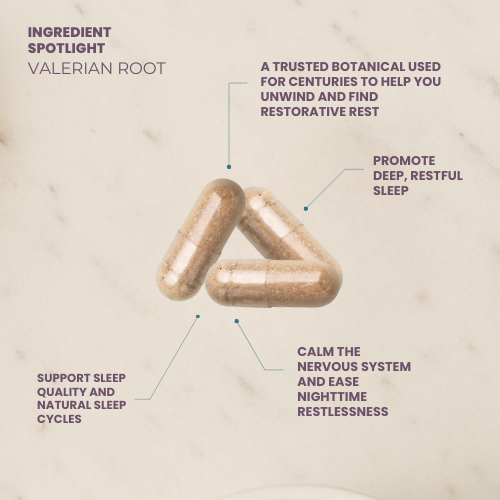
Then there were the botanicals. Valerian root has been used for centuries for sleep support, and studies show it may help reduce the time it takes to fall asleep. Chamomile is known for its calming properties. Lemon Balm has been traditionally used to ease restlessness and support relaxation.
And here's what really stood out: research suggested that magnesium works particularly well when paired with Vitamin B6. The combination may support even greater improvements in stress symptoms and sleep quality than magnesium alone.
Why I Didn't Want Melatonin
A lot of people suggested I try melatonin. It's the most common recommendation for sleep issues. But the more I researched, the more hesitant I became.
Melatonin is a hormone. When you take it externally, you're adding synthetic hormones to your system. And whilst it can help with specific situations like jet lag, it often left people feeling groggy the next morning. I read accounts of people waking up feeling foggy, struggling to get their day started, still exhausted despite technically sleeping.
That wasn't what I needed. I needed to support my body's ability to produce its own sleep hormones, not override the process entirely.
That's when the amino acid research became so compelling. L-Tryptophan isn't a hormone. It's an essential amino acid, a building block your body uses to make serotonin, which then converts to melatonin naturally. You're not adding the end product; you're giving your body what it needs to create it on its own terms.
The difference mattered to me. I wanted to work with my body's natural processes, not force them. I wanted to wake up if I needed to, not be knocked out beyond responsiveness.
Reading all of this, something shifted for me. Sleep wasn't going to improve by addressing just one piece. My body needed multiple types of support working together.
But crucially, I needed support, not sedation.
Amino acids to give my body the building blocks for producing sleep hormones naturally. Calming botanicals to ease my nervous system without drugging it. Magnesium and B6 to support the psychological function and nervous system health that stress had been undermining.
It wasn't about finding a single magic ingredient or a pharmaceutical knockout solution. It was about giving my body the nutrients it needed to do what it's designed to do: rest when it's safe, wake when it's needed.
That's what I wanted. To sleep better without losing myself in the process.
What I've Learned
Sleep issues don't exist in isolation. They're woven into stress, trauma, and how your nervous system responds to the world. You can't just address one piece and expect everything else to fall into place.
For me, the combination of practices mattered. The yoga, the breathing, the stretching: they're still essential. But adding amino acids, magnesium, and supportive botanicals gave my body what it needed to actually relax whilst still remaining me. To let go without being forced. To trust that it was safe to rest, knowing I could still wake if I needed to.
I didn't want to be sedated. I wanted to support my body's natural ability to find calm.
If you're struggling with sleep, I'm not here to tell you supplements will solve everything. But if you're doing all the right things and still lying awake at night, it might be worth asking whether your body has the building blocks it needs. Not to force sleep, but to support the natural processes that make it possible.
It was for me. And I'm sleeping now. Not perfectly. But genuinely. And I wake up feeling like myself.